What Is AI Cold Calling
AI cold calling means outbound calls placed by a voice AI agent instead of a person. It calls through an uploaded list, opens with a natural voice greeting, answers questions asked back, and qualifies the person on a script: are they interested, who makes the decision, is there a need right now.
It’s important not to confuse this with a robocall. Auto-dialers and IVR systems just play a recording and ask you to “press 1” — they don’t understand speech and they annoy people. An AI agent recognizes free-form speech, reacts to the meaning of an answer, and follows branching logic: ask about price, it quotes a range; say “not a good time,” it offers to call back.
In effect, it’s the first layer of a sales team that never gets tired, never burns out, and runs the same script around the clock. It doesn’t replace a salesperson entirely — it takes over the heaviest, least enjoyable stage: hundreds of dial attempts for a handful of interested answers. One agent can run dozens of parallel lines, so in a single day it covers what a small call center would need a week for.
Where AI Cold Calling Works Best
Voice AI covers four typical first-touch scenarios. In each one it saves the most expensive resource — a rep’s time:
- Cold lists. Initial filtering: out of a list of thousands, the agent pulls out the people it’s actually relevant to within a couple of days and filters out the rest. The rep gets not a “call list” but a short list of warm contacts.
- Warm lists and inbound leads. Speed decides the outcome. AI calls back on a new lead within seconds, while the person is still on the site and “hot,” not two hours later when they’ve already messaged a competitor.
- Reactivating “sleeping” contacts. Calling old customers and lost deals with a new offer — something live reps never get around to for years. This is where AI surfaces money that’s already sitting in the list.
- 24/7 inbound front desk. Taking calls at night, on weekends, and during peak hours: the agent answers common questions, books a meeting, and never misses a call.
Each scenario gets its own logic and call script — we cover this in more detail on the PRISRA AI agents page.
How AI Runs the Call and Qualifies a Lead
The call follows a branching script but sounds natural — with pauses, intonation, and reactions to what the other person says. A single touch usually follows this pattern:
- Opening. An introduction and a short reason for the call — no hard pitch. The goal is to keep the person from hanging up in the first five seconds.
- Qualification. 2–3 questions about need, timing, and the decision-maker. The answers are what turn a “contact” into a “warm contact.”
- Handling questions. The agent answers common ones — “how much does it cost,” “who even are you,” “email me instead” — from a pre-built knowledge base.
- Target action. Book a call with a rep, set a meeting on the calendar, or send materials to an agreed contact.
Everything the person says is captured as a structured result: status, answers to the qualifying questions, next step, recording, and transcript. The rep doesn’t have to decode “what happened on the call” — they see a ready-made card. This control and structure is what separates the system from a plain auto-dialer; we show how it’s built on the turnkey AI systems page.
AI Cold Calling Metrics and the PRISRA Case Study
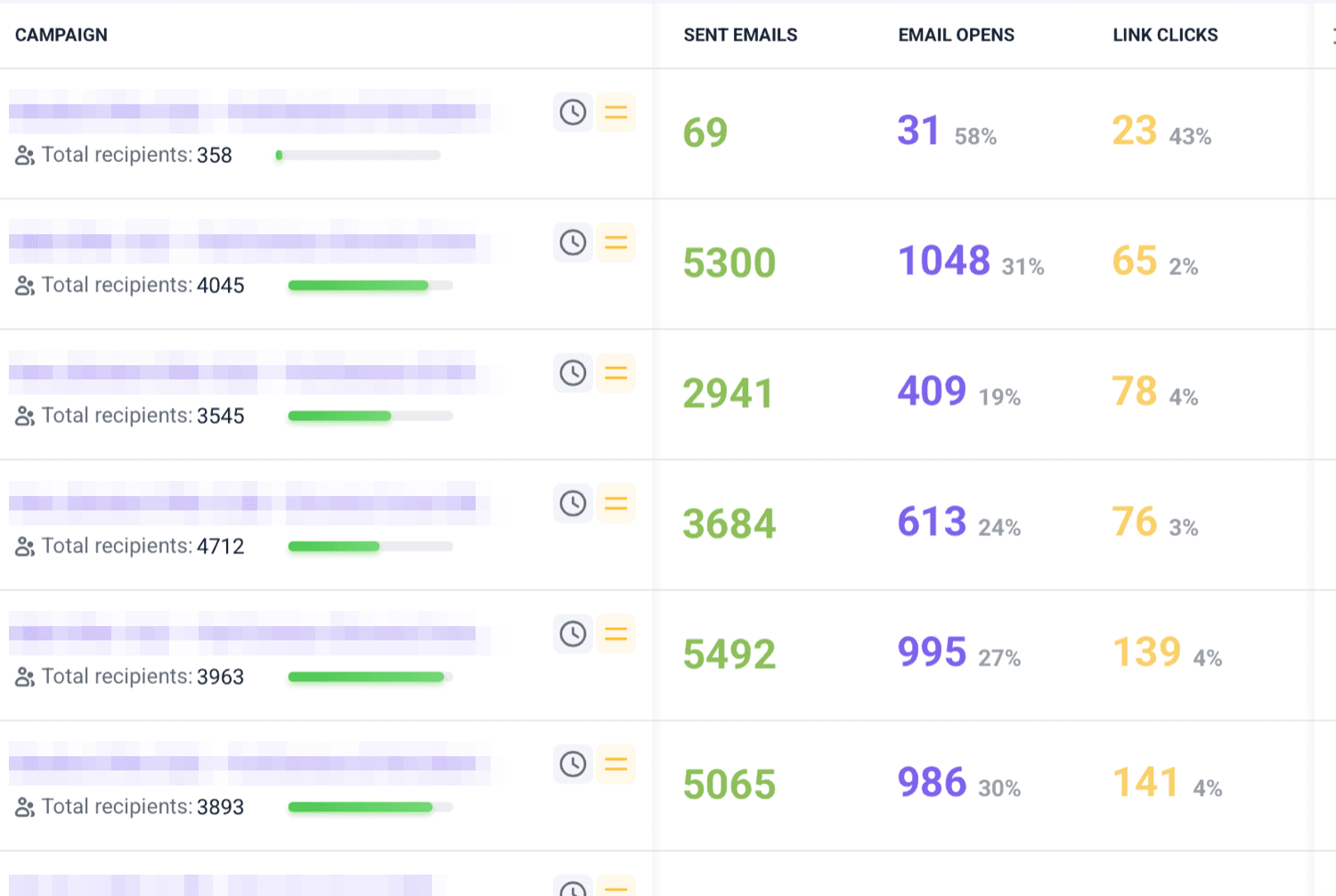
AI cold calling performance is measured by three numbers, not a “feel” for the calls:
- Answer rate — the share of dials where someone picked up and a conversation happened. Depends on list quality and call timing.
- Warm rate — the share of warm, qualified contacts out of everyone who answered. Shows how accurate the script and offer are.
- Cost per warm contact — what one ready-to-hand-off lead costs in dollars. This is the main number to compare against a call center or ads.
A live example from our own work. For a US dental company, we ran AI cold calling against a cold list of dental practices. Results over 10 weeks:
- 9,604 calls made;
- 6,217 calls over 15 seconds — 65%, including answering machines;
- 1,208+ warm contacts — at least 19% of calls over 15 seconds;
- $0.82 or less — cost per warm contact.
2,261 calls are not yet classified, so the warm count is a lower bound and the cost per contact an upper bound.
No live call center can match that volume in that timeframe at that price — or hold the same script quality on call number 1 and call number 9,604. And the reps didn’t get a “list to work through” — they got 1,208+ already-warmed contacts who’d agreed to keep talking. That’s the point of AI on the first touch: the machine handles volume and filtering, and people only work with what’s already worth their time. As a benchmark: for a cold list, a cost per warm contact in the low single dollars is already a strong result you can scale from with confidence.
CRM Integration and Handoff to Sales
AI cold calling without a CRM turns into hundreds of lost conversations. The value only shows up once every call’s result lands in the system automatically. A proper setup looks like this:
- Every call is logged in the CRM: status, transcript, audio recording, answers to qualifying questions.
- A warm contact automatically creates a task and routes to the right rep as a priority.
- The rep opens the record and immediately sees what’s already been discussed — no starting the conversation from zero and repeating questions.
- Non-fits and “call back later” go into separate segments for future reactivation.
That way the first touch flows seamlessly into a human’s work — no manual handoffs, no “forgot to call back,” no drops at the handoff point. If you don’t have a process built for this kind of flow yet, see how we build a turnkey sales team around this funnel: from the list and script to revenue reporting.
Where AI Doesn’t Replace a Human
To be honest: AI cold calling is the first touch, not the whole sales team. It won’t replace a human where you need:
- complex negotiation and back-and-forth on large deals with multiple decision-makers;
- handling unusual objections with genuine empathy, where a live reaction matters;
- closing and building relationships over a long deal cycle.
The model is simple: AI takes the volume and the grind, a human takes the close and the money. Trying to get the agent to “close” a big deal usually backfires — that needs a salesperson. Separately, factor in consent requirements for calls: cold calling in the US is governed by strict FCC rules on calls and consent, and they need to be built into the list, call timing, and script upfront, not fixed after the fact.
Calls to US mobile numbers require prior express consent under the TCPA (FCC 24-17). In the EU, callers must be told they are talking to AI (AI Act, Art. 50).
Where to Start with AI Cold Calling
Launch takes days, not months. A sensible order looks like this:
- List and offer. Clean, current numbers and one clear reason for the call. A bad list kills even a perfect script.
- Script and qualification. What you ask, what counts as “warm,” where the conversation leads.
- CRM integration. Where results, tasks, and recordings land, who gets the warm lead.
- A test run of 500–1,000 calls. Measure answer rate, warm rate, and cost per contact — on real data, not a forecast.
- Scale. Tighten the script on weak points and grow volume wherever the economics work.
Want to know if AI cold calling will pay off on your list specifically? Get a free assessment — we’ll estimate the metrics for your niche, offer, and goal, and tell you honestly where AI will pay for itself and where you still need a person.